

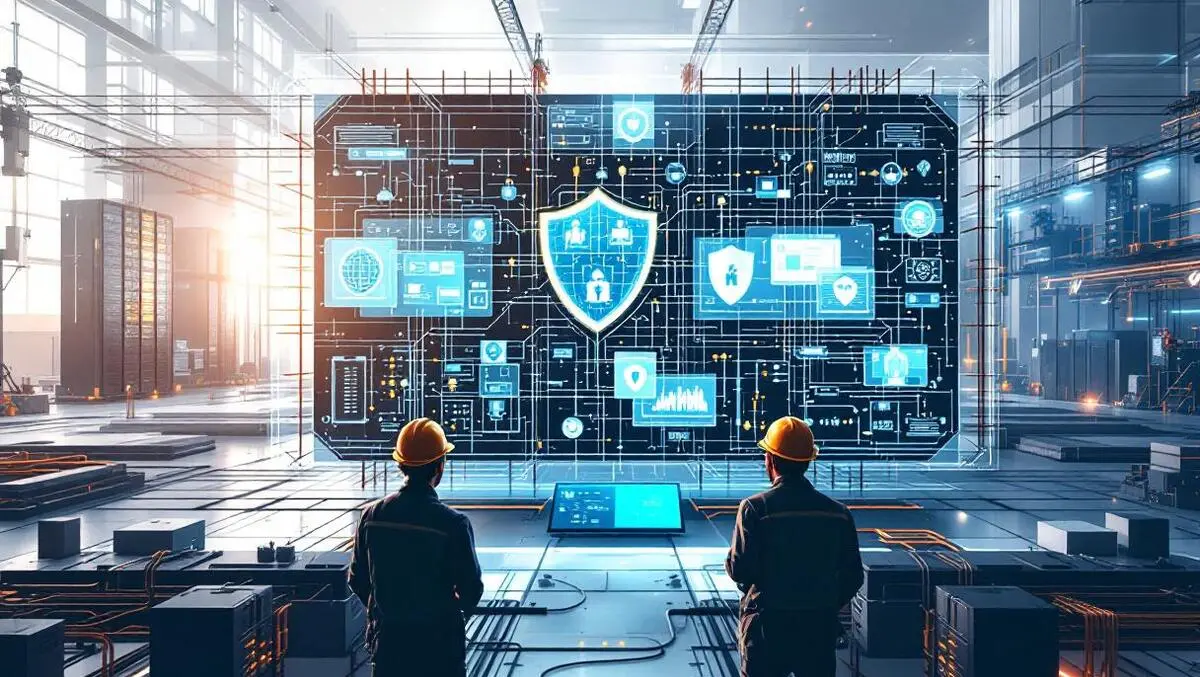
TrendAI, Nvidia bring digital twin security to AI hubs
Wed, 18th Mar 2026
TrendAI has released an integration with Nvidia's DSX Air Platform that lets organisations model and assess security controls for AI-centric datacentres using digital twin simulations before physical deployment.
The integration targets what the companies call "AI factories"-infrastructure and operational stacks designed for large-scale AI development and deployment. TrendAI framed it as a shift towards building security into the design stage rather than adding controls after systems go live.
DSX Air is a cloud-hosted network simulation environment that supports creating and testing digital twins of data centre infrastructure ahead of installation. Organisations use these simulations to validate network design and operational behaviour in a controlled environment.
Design-First Security
Within DSX Air, security teams can test how controls affect performance and resiliency during a simulated build. TrendAI positioned the approach as a way to shorten early evaluation cycles and reduce reliance on physical lab environments for proof-of-concept work.
Rachel Jin, Chief Platform and Business Officer at TrendAI, said:
"True innovation requires the best of both worlds: AI plus cybersecurity. Securing AI at scale isn't something you can bolt on later. It requires a purpose-built foundation. By empowering customers to check the impact of security on digital twin simulations, we're pioneering a new Secure AI Factory approach."
Nvidia described the integration as part of its broader effort to validate AI datacentre designs ahead of rollout. Amit Katz, VP of Networking at Nvidia, said: "NVIDIA is focused on simplifying and accelerating the design and validation of next generation AI factories. Working with partners like TrendAI provides organisations with the visibility to detect threats across the entire stack, from cloud to endpoint, so they can focus on scaling AI without compromising security."
The companies said the collaboration aims to meet security requirements that have become more prominent as AI systems move into business-critical workflows. In heavily regulated sectors such as finance, healthcare, and government, organisations often need evidence of control effectiveness and operational assurance before deployment.
Breach Risk
Security concerns around AI systems have grown as organisations adopt new model pipelines, plug-ins, and application interfaces. The integration arrives as enterprises assess the implications of AI-driven services that rely on many third-party components and rapidly changing software stacks.
TrendAI cited IBM research reporting that more than one in 10 global organisations experienced data breaches involving their AI models or applications last year. It also pointed to IBM's finding that organisations without AI or automation faced average breach costs of USD $1.9 million more than those that did. TrendAI highlighted issues such as access-control gaps and supply-chain risks tied to compromised apps, APIs, and plug-ins.
In the simulated environment, customers can examine how security measures affect an AI factory build early in the lifecycle, including the operational impact of policies and controls without requiring physical infrastructure upfront.
Two Components
The integration has two main elements. The first is TrendAI Vision One agentless EDR security for AI factories. TrendAI described it as a lightweight security agent deployed on Nvidia BlueField data processing units, integrated with the Nvidia DOCA Argus software framework.
TrendAI said this component provides host visibility into file activity, network interfaces, and active processes, and captures and analyses network traffic. It uses TrendAI threat intelligence to identify suspicious behaviour.
TrendAI also said customers can run red-team exercises in the simulated environment to model recognised adversary behaviours using the MITRE framework. The goal is to assess infrastructure configuration and security posture before hardware is installed and services go live.
The second element is network defence using TrendAI TippingPoint. TrendAI said customers can test virtual patching technology in the DSX Air digital twin, drawing on the TrendAI Zero Day Initiative and network detection and prevention features such as intrusion detection and intrusion prevention.
Simulation testing can provide early insight into whether planned patches and mitigations would have operational side effects. TrendAI said the goal is to confirm patches can be deployed safely and efficiently with minimal disruption to live operations.
Operational Shift
The integration reflects a broader trend in datacentre engineering and security operations, as organisations look for ways to validate complex deployments before procurement, build-out, and migration. Digital twins, simulation, and automated testing have become more common as infrastructure stacks evolve faster and become harder to replicate in traditional lab environments.
For security teams, simulation offers a way to test policies and controls safely while creating a more structured path for documentation and assurance-particularly in sectors where governance and audit requirements drive deployment decisions.
TrendAI said the DSX Air collaboration adds security testing and threat visibility to simulation-based design workflows, and expects customers to use the integration during early-stage planning and validation of AI datacentres.