

Canadians tracking astronaut health with AI for lunar missions

Last week, Canadian astronaut Jeremy Hansen launched from Kennedy Space Center in Florida as part of the crew for Artemis II. On board that spacecraft are many complex mechanical components monitoring the movements and vital signs of each astronaut.
Dr Carolyn McGregor, Research Chair in Artificial Intelligence for Health and Wellness at Ontario Tech University, studies astronaut data to empower new technologies that keep the human body in space as close to Earth as possible. Her team's work is now more important than ever as humankind sets forth to a new objective, the moon.

In conversation with TechDay Canada, McGregor explained how her healthcare IT background mixed with space exploration around a decade ago. McGregor's background is working with computing and analytics platforms in her home country of Australia. She branched into healthcare while developing a computing platform to support clinical decision-making, ingesting real-time physiological data and identifying trends using medical device data, including real-time heart rate, breathing, and blood oxygen saturation.
She met retired Saskatoon-born astronaut Dafydd Williams while he was CEO of South Lake Regional Health. She said the astro-turned-health executive told her the work was the type of system he believed the Canadian Space Agency (CSA) needed for astronauts, because their bodies, particularly their cardiovascular systems, undergo an adaptation process after launch.
In 2022, when the CSA put out a call for groups to propose Connected Care Medical Module (C2M2) prototypes, McGregor's Ontario Tech University team, in partnership with CGI, Okaki, Hexoskin, 12Volt Games Studio and PrecisionOS, set forth to build a prototype the size of a shipping container, fit for space and lunar expeditions.
The module, named Harmony, integrated virtual reality training for emergency response scenarios involving critical health incidents, provided mechanisms for ongoing health monitoring to run autonomously, and maintained connections to Earth as required.
"The reason it's a shipping container, is to t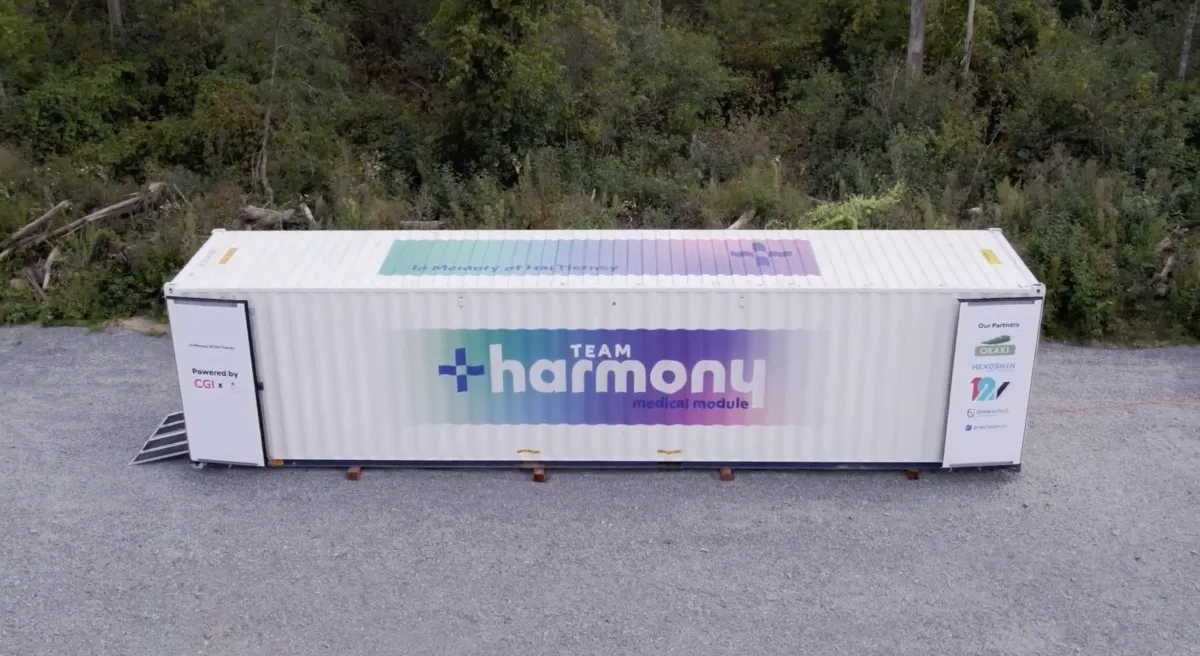 hink about how to transport it. The goal was that this could be commissioned on the lunar surface as a pod," said McGregor. "Astronauts need to be able to be trained on medical procedures, and they need to be trained in the moment if they're needing to deal with certain medical procedures. So the idea is that you can propose a library of lots of different medical procedures for different incidents they may be dealing with in the moment, and you have that available in the pod along with the tools to be able to perform the procedures."
The CSA selected Harmony along with the four other projects submitted from Baüne, Canadian Space Mining Corporation, Lunar Medical, and Phyxable. McGregor said the CSA decided that, rather than choosing one, it would move forward with integrating all five submissions.
As NASA advances its Artemis program, it's doing so with the help of the CSA. Contractors are currently developing the Canadarm3, while a lunar rover and cargo utility rover are also underway. Throughout it all, human data is what helps space technology evolve.
While McGregor is not able to speak to the specific technology related to her research that is being used in space on the current mission, she shared that "there are health mechanisms that are supporting [the mission]."
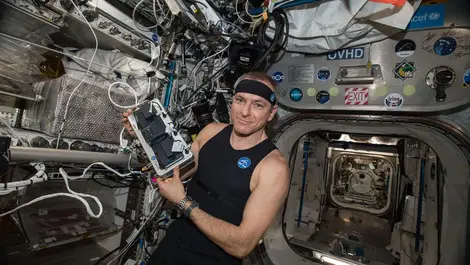
As it seems the world has returned to exploring where no one has gone before, McGregor's studies continue beyond the Harmony module. Since 2023, she has been leading two studies running on the International Space Station. One on space health for the CSA; the other on space health for the private sector, with expeditions including Axiom Mission 1. This research uses the Bio-Monitor shirt, Hexoskin, made by Carré Technologies of Montreal, Quebec.
"The Bio-Monitor, which is both the garment and the integrated computing system to gather the data that is used by astronauts on the International Space Station. So that is a piece of equipment that Canada has to gather data about the physiology, and I use that to be the data collection mechanism that then feeds my artificial intelligence platform to monitor how the astronauts are adapting," she said.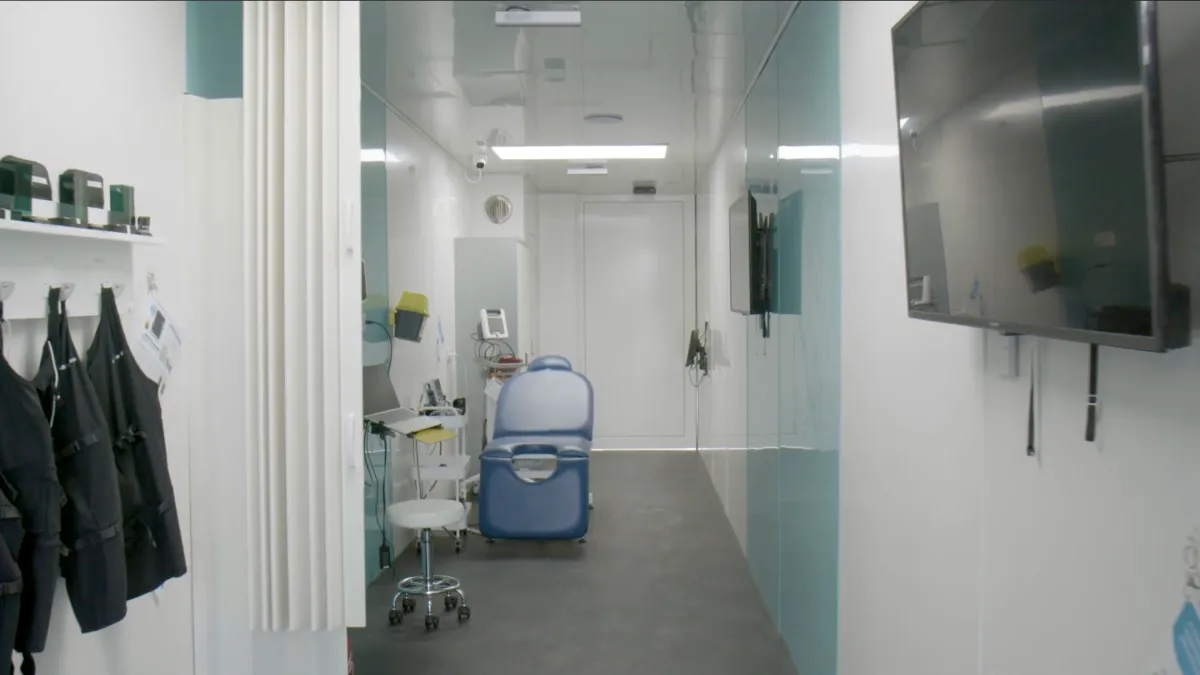
The distinction between private and public is of the essence, as private space trips tend to be much shorter in duration, from days to the private standards that are typically months on board the ISS.
"Understanding the much longer-term impacts from a six-month mission to a longer mission and what we need to put in place to support human health is really important," said McGregor. "Having systems that are monitoring the impact of the countermeasures - what the astronauts do with the exercises and other things - is really important to plan a much longer mission where the impact on the body goes for much longer"
As space exploration enters a new age on the moon, McGregor said researchers are working in parallel so that these computing systems are ready to go and are more responsive and granular in their reporting. In other words, a highly defined digital twin for astronauts, so they can monitor how their bodies behave off Earth.
"Even when Yuri Gagarin went into space [he] was wearing an electrocardiogram monitor. When he came back down to earth, they printed out the outputs from the monitor, and they used a ruler to measure distances and to do calculations. So there's been mechanisms to try and understand. Astronauts are not wearing monitoring all the time, and we're trying to now provide mechanisms that we don't have to wait for the data to come back to Earth."