

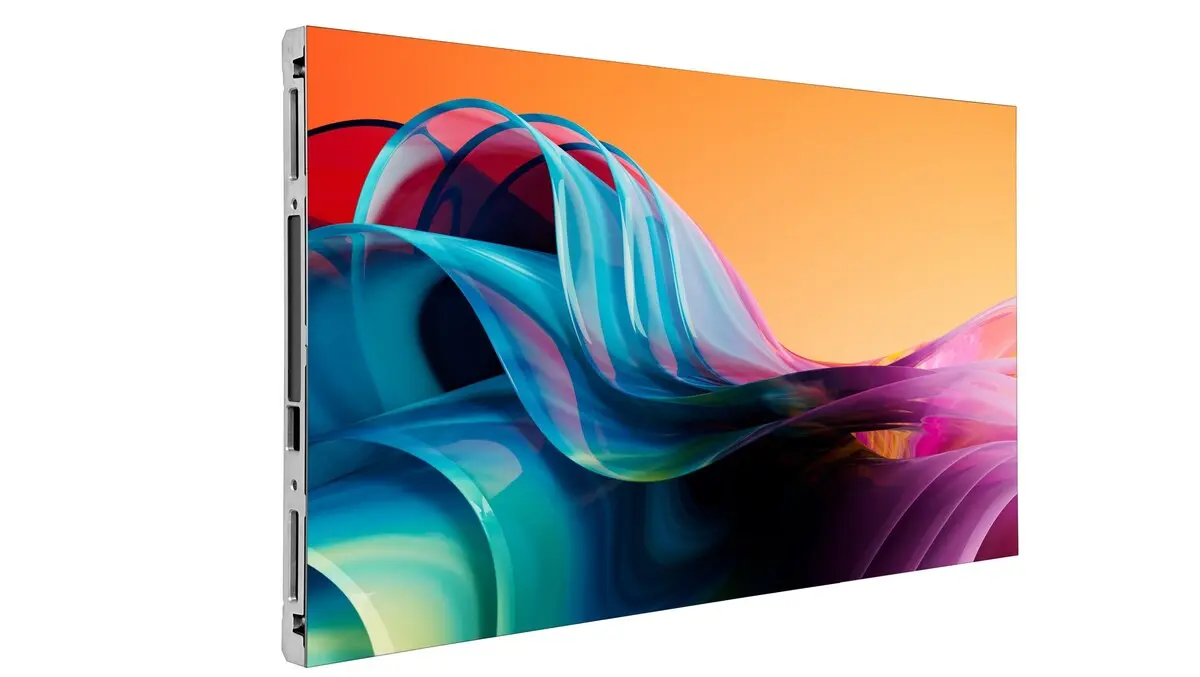
Sharp unveils EC Series COB direct-view LED displays
Thu, 5th Feb 2026
Sharp Canada has introduced the EC Series, a new range of direct-view LED video displays built with Chip-on-Board (COB) construction as part of its E Series family.
The EC Series targets large-format indoor installations in retail, corporate, education and public spaces. Sharp positioned the launch as a response to demand for lower operating costs and more durable display surfaces in high-traffic environments.
Chip-on-Board
The EC Series uses Chip-on-Board, or COB, instead of the more common Surface-Mounted Device (SMD) approach found in many direct-view LED displays. COB bonds multiple LED chips directly to the display substrate, changing the pixel-layer structure and enabling a protective encapsulation over the LEDs.
Sharp said COB can cut power use by up to 60 per cent compared with SMD LEDs, reducing energy costs while maintaining brightness. It also cited durability benefits from the encapsulated surface, describing it as touch-friendly and resistant to dust and impact.
Sharp also highlighted image-quality benefits associated with denser LED integration, citing contrast ratios of up to 10,000:1 and support for deep blacks and uniform visuals. These characteristics can be important in corporate presentation areas, lecture theatres and large internal communications screens, where viewers sit at varying distances and angles.
Installation Focus
Alongside operating efficiency, Sharp emphasised deployment. It described the EC Series cabinet design as "intuitive" and said it can cut installation time by up to 50 per cent compared with conventional direct-view LED displays. The line-up is aimed at organisations that want large-format LED walls with fewer on-site integration hours and less disruption during fit-out.
The EC Series will be sold in pixel pitches of 0.9, 1.2, 1.5 and 1.8 mm. Pixel pitch helps determine viewing distance and perceived resolution, with smaller pitches generally suited to close-up viewing in meeting rooms and collaboration spaces. Larger pitches are typically used where audiences sit farther back, such as atriums and auditoriums.
"The EC Series delivers striking visuals, durability, improved energy efficiency, and simplified installation in a single platform, reinforcing Sharp's commitment to leading the dvLED market with solutions that are impressive, sustainable, and easy for customers to adopt from day one," said David Oyagi, Category Business Manager, Visual Solutions, Sharp Electronics of Canada.
The EC Series is scheduled to begin shipping in April 2026.
Broader Portfolio
The EC Series arrives as competition increases in the direct-view LED market, where vendors have expanded offerings for indoor and outdoor applications. Sharp sells direct-view LED displays that scale across sizes and formats, including installations for digital signage and immersive environments.
Direct-view LED has gained traction as organisations move away from projector-based systems and seek higher brightness and more consistent image quality under varied lighting. Adoption has also been influenced by falling component costs and improvements in manufacturing methods such as COB, which are intended to address resilience and serviceability concerns in high-use locations.
University Deployment
Sharp also cited a recent Canadian university installation as an example of direct-view LED use in education and public-facing campus settings. It worked with systems integrator Diversified at Western University in Ontario.
According to Sharp, displays were installed at the Schmeichel Innovation and Entrepreneurship Centre in areas used for internal events, lectures and large gatherings. Screens were placed across spaces intended for academic and administrative programming, as well as cultural activities.
Sharp also pointed to physical design considerations in the deployment, including slim profiles and neutral finishes. These factors can influence procurement decisions in both heritage buildings and modern architectural environments, alongside considerations such as brightness, service access and acoustics.
The Western University project also highlights the role of integration partners in direct-view LED deployments. Large-format LED walls often require site surveys, structural planning, signal distribution and commissioning beyond the display hardware itself, making partner networks an important part of execution in corporate and education markets.