

The Ultimate Guide to Application Security
A curated Canadian edition of TechDay news, analysis, interviews, reviews, job moves, and related resources for Application Security.
What to know about Application Security
Application Security focuses on protecting software applications from vulnerabilities and cyber threats throughout their development and operational life cycles. This critical field addresses challenges such as runtime protection, secure coding practices, DevSecOps integration, API security, cloud-native environments, and mitigating attacks like DDoS, supply chain risks, and malicious bot traffic.
Exploring the latest stories in Application Security reveals how advancements like AI and automation are enhancing threat detection, vulnerability management, and developer workflows, while highlighting ongoing risks found in mobile apps, open source components, and cloud deployments. Readers can gain insights into best practices, emerging technologies, and strategies to safeguard applications against evolving cyber threats.
Whether you’re a developer, security professional, or business leader, staying informed about Application Security developments helps in building resilient software, maintaining compliance, and protecting user data in an increasingly complex digital landscape.
Canadian Application Security News
Regional stories with direct local relevance.webp)
ServiceNow unveils six autonomous security products
Rising AI-driven threats are pushing firms to consolidate security operations, as ServiceNow adds automation across exposure, identity and incident response.

Alberta uses Claude to scan 466 million lines of code
The province found hidden security flaws in public sector systems in hours, a task officials say could have taken a manual review 6.5 years.

eSentire launches Atlas Preempt for continuous testing
Continuous attack testing aims to help customers spot exploitable gaps before criminals do, including misconfigurations hiding outside core systems.

World Backup Day 2026: In the age of AI, what are you really backing up?
AI disruptions and cyberattacks are forcing organisations to back up models, prompts and knowledge bases, not just files.

Check Point launches Canada-only data region for WAF
Check Point debuts Canada-only WAF data region, promising full data residency, lower latency and AI-driven protection for local organisations.

Bell Cyber & Radware launch AI-driven cloud security
Bell Cyber and Radware have unveiled an AI-driven, fully managed cloud security service to shield apps, APIs and sites from automated attacks.
Analyst Insights
Research and market analysis connected to Application Security
Contrast Security named leader in IDC DAST assessment

Fastly named Leader in IDC MarketScape WAAP assessment

Broadcom launches TrueSource to bolster open source security

Netskope launches control to block risky AI agent actions
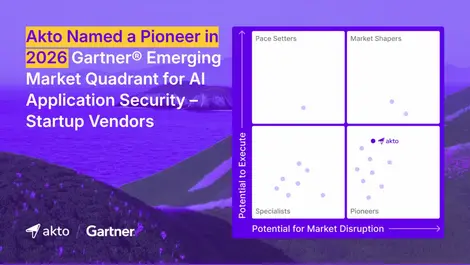
Akto named pioneer in Gartner's AI security quadrant
Expert Columns

AI closes vulnerability window as zero-day exploits surge

When AI memory, simulation and provenance collide

Supercharged security: Cyber risk in the age of frontier AI

A strategic blueprint for governing AI-enabled software development

Why ERP is not just another platform you can rebuild with AI code

As agentic development accelerates, workflow auditability becomes a bottleneck
World Backup Day 2026: In the age of AI, what are you really backing up?

The evolving role of the CSO: From technical guardian to business strategist

Secure by default: Moving beyond secure by design

Why the next endpoint and SASE disruption will not come from a security vendor
Interviews
Interviews and video coverage from the network




Recent Application Security News

Meta's Muse AI agent seen in half of customer traffic
Security teams face a new attribution problem as Meta's Muse AI agent can slip into customer traffic while posing as an ordinary browser.

Tenable launches open AI partner network for security
Security teams can now connect exposure data with third-party AI tools to triage risks faster without building custom integrations.

Tanium joins Microsoft AI security preview for MDASH
The limited preview could help uncover more complex vulnerabilities in Tanium's code, as Microsoft tests MDASH with a small group of partners.

Cycode launches workstation protection for developers
Malicious packages can now be blocked before they reach developers' machines, as supply chain attacks shift into AI-assisted coding workflows.

Microsoft warns AI is deepening cyber threat links
Threats are now spanning identities, cloud and software supply chains, with AI speeding attacks and complicating defence, Microsoft says.

Bitdefender launches AI Guardian beta for Mac agents
Mac developers using autonomous agents now get a free beta tool that blocks risky actions before tools, files or credentials are exposed.

Sectigo launches quantum readiness tool for enterprises
Governments and standards bodies are pushing firms to map cryptography now, as missing assets could leave them exposed to post-quantum risks.

StackHawk launches Wingman to fix flaws in AI coding
The tool aims to close security gaps left by AI-written code before vulnerabilities reach security backlogs or pull requests.

Orca launches AI partner platform to boost channel sales
Partners may win more business faster as Orca links rewards to lifecycle performance and uses AI to cut sales admin time.

Eve Security raises USD $7.5 million for AI agent tools
Growing concern over autonomous AI systems has helped the Austin-based startup secure fresh backing to expand sales and revenue growth.

StackHawk launches Wingman to fix AI coding flaws
It aims to help engineers close software flaws before pull requests are opened, as AI coding tools accelerate release cycles and security backlogs grow.

SHI warns firms to prepare for quantum security risks
Businesses may have only a few years to replace ageing encryption before quantum computers make current security methods vulnerable.

UNC6240 hits PeopleSoft flaw in global renewed attacks
Dozens of organisations worldwide face renewed compromise risk after attackers used an encoded path to slip past defences and hit Oracle PeopleSoft.

Secure Code Warrior launches AI literacy course for staff
With most firms using AI but few staff ready, the course targets non-developers handling sensitive data and automations at work.

Citrix adds AI browser session insights for agents
Security teams can now trace risky browser activity by staff and AI agents, as Citrix adds visual session records and policy guidance.

Fastly launches AI controls as machine traffic surges
Machine-generated requests now account for more than half of Fastly's network traffic, intensifying pressure to govern AI costs and security.

StackHawk launches Wingman to fix flaws in AI coding
Security teams may cut backlogs as Wingman finds, fixes and verifies flaws inside AI coding tools before pull requests are opened.

Azul launches AI assistant for Java security checks
IT teams can now spot unpatched Java versions and Oracle licensing exposure in live production data, cutting the risk of audit surprises.

Palo Alto launches continuous AI defence for clients
Attackers are exploiting AI faster than many defences can respond, prompting a shift to continuous testing for hidden exposures.

Akamai warns of blind spots in workplace agentic AI
More than 40% of enterprise users have installed AI browser tools, leaving security teams struggling to spot permission changes and rogue agents.