

Pick 'n' mix needed for Canada AI infrastructure: NRTH panel
Fri, 25th Sep 2026 (Today)
Microsoft and Cohere executives agree Canada needs AI sovereignty, but they distinguish Canadian ownership from practical sovereignty amid rising pressure.
While Canada has the right to be the global leader in maple syrup and hockey, Cohere's Country Manager for Canada, Michael Pelosi, emphasised it has an absolute right to lead the world in AI. He said while Canada have historically fallen behind on AI adoption, rushing forward all at once while, striving for absolute perfection can be a critical mistake.
"I often don't think it's fair to paint the country with this brush of we're not moving fast enough and we're doing everything wrong. I think we're a country that likes to do it the right way. We like to take a certain amount of risk," said Pelosi. "Do I think there's room for a little more? Of course, but I'm never naive to the fact that there's always a downside of going too far that way as well."
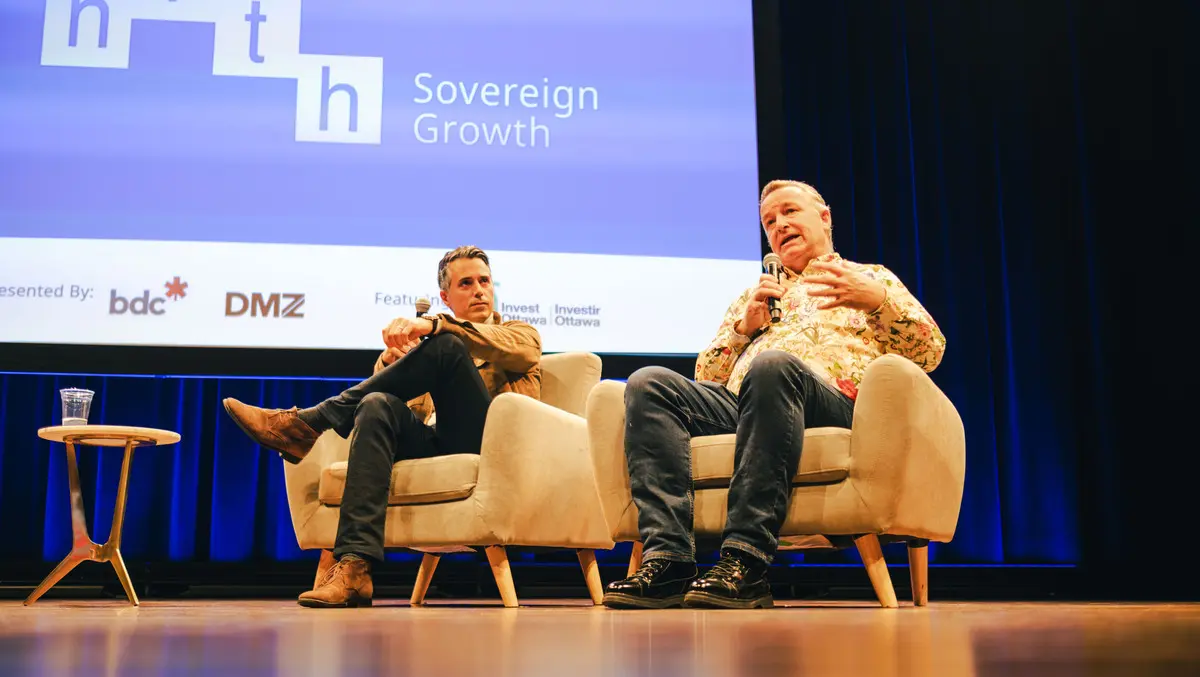
In conversation with John Weigelt, National Technology Officer for Microsoft Canada and Rushmi Hasham, Director, Mission Programs & Partnerships at the SANS Institute, at this year's NRTH Festival (formerly Elevate Festival), Pelosi took a look back at the recent Canada Investment Summit in Toronto hosted by Prime Minister Mark Carney, where he said the idea of sovereignty was emotional, tied to Canadian ownership in data on Canadian soil.
While it would be no little feat to have a Canadian data centre with an entirely in-country sourced supply chain, he emphasised it would take a long, long time.
"We're a proud Canadian company, Cohere, and of course it's easy for me to say make sure you buy all Canadian, including your LLMs. But that wouldn't be very fair. We use LLMs, both our own as well as others. This isn't about not working with companies in the AI space that aren't based in Canada; it is about thinking about the long term, but not letting that be an excuse to prevent you from making sure that you're really utilising this technology today," Pelosi said. "You've got to start now."
Weigelt, who has been the responsible AI lead at Microsoft Canada for eight years, emphasised a strategy where critical components may be international, but Canada should choose where control, data, infrastructure, skills and jobs are strategically important. He quoted AI Minister Evan Solomon's widely cited quote from last year's ALL IN conference, "sovereignty is not solitude."
When asked how he defined sovereignty, he turned to Gartner's definition, which splits it into four pillars: data, operational, strategic and technological sovereignty.
"As Canadians, we all feel the anger around national sovereignty, about our nationhood. AI sovereignty is not about our nationhood. AI sovereignty is around how do we protect our data, how do we protect our operations, how do we protect the technologies that are there, and build to prosperity," Weigelt said.
To put it in context, he said the entire supply chain does not need to be Canadian; while helium, a component of advanced semiconductor chips and GPU operations, is sourced in Saskatchewan, it is refined south of the border because Canada lacks a commercial-scale liquefaction facility, for example.
Weigelt also noted the country's reliance on advanced semiconductor chips built with extreme ultraviolet lithography machines made primarily by ASML, a Dutch company.
With a fast-shifting landscape, he argued that betting an entire sovereignty strategy on one model, one vendor, or one layer of the stack is riskier than identifying the specific components from data to infrastructure and skills, where Canadian control genuinely matters.
"Let's pick those spots where that we need those those elements. Let's pull on this thread on AI a little bit," he added. "We need to be able to right size and understand where we build those particular components and where we pick our slots, and so I think this is a very nuanced conversation."