

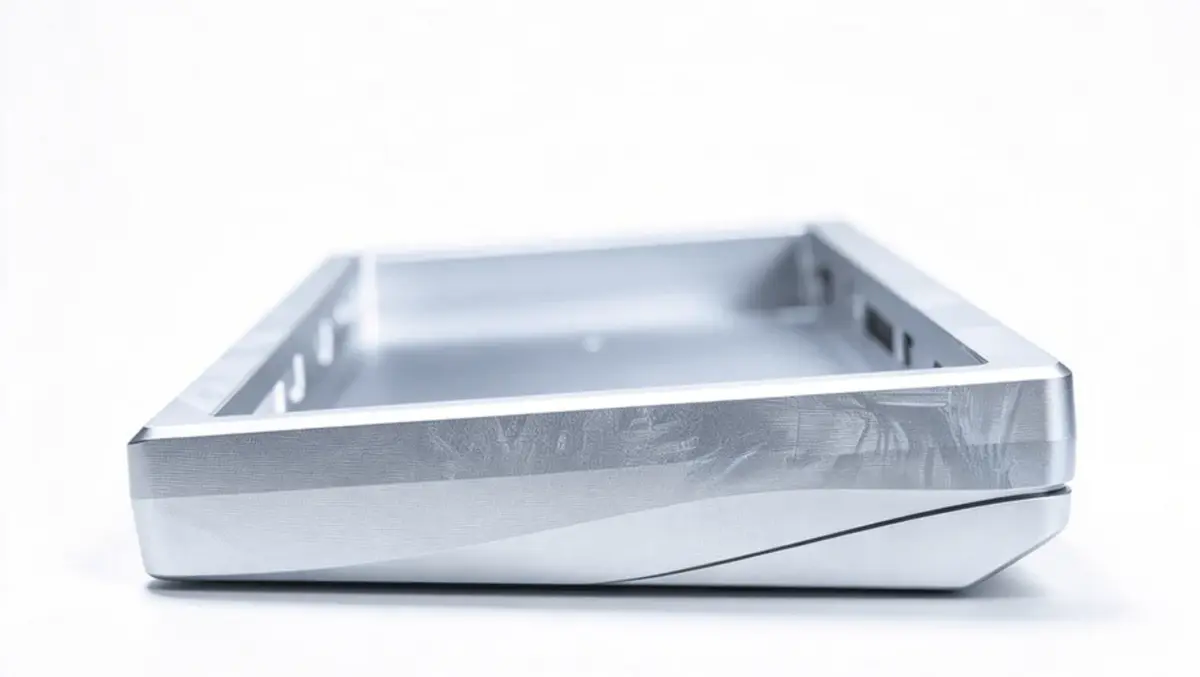
Womier guide spotlights GH60 case kits for Wooting 60HE
Thu, 26th Nov 2026 (Today)
Womier has published a guide to GH60 case mod kits for 60% keyboards, focusing on compatibility with boards including the Wooting 60HE and 60HE+.
The guide outlines what it calls a "full-mod" build, a term in the custom keyboard market for keeping the original printed circuit board while replacing most surrounding components. Buyers often retain the original PCB because it contains the firmware, calibration data and warranty, while changing the case, plate, foam, stabilisers, switches and keycaps to alter sound and feel.
At the centre of the explanation is the GH60 standard, described as a shared physical and electrical reference for 60% keyboards rather than a brand. The guide identifies a 28.5cm by 9.5cm footprint, six tray-mount standoffs and a top-left USB-C cutout as the key design points that allow parts to work across multiple boards.
That common design has become particularly relevant for owners of Hall-effect keyboards such as the Wooting 60HE and 60HE+ Module, which the guide describes as GH60-compatible. According to the document, this has created a market for replacement cases aimed at Wooting users who want to move away from stock enclosures without changing the underlying PCB.
Four kits
Womier compares four GH60 case kits, each aimed at different price points and styles of use: the M1X60, EGO60, CLT60 and Hollow60.
The M1X60 and EGO60 are both listed at USD $209.99, while the CLT60 is priced at USD $157.49 and the Hollow60 starts at USD $68.24. All four share the same GH60 footprint and include five pre-lubed stabilisers, but differ in finish, plate material, dampening layers and design.
The guide places the M1X60 at the top of the range, describing it as a machined aluminium case with a carbon fibre plate and laser engraving. The EGO60 is presented as a more sculpted design with dual-layer foam, while the CLT60 is positioned as a lower-cost option with an FR4 plate. The Hollow60 is described as an open-frame skeleton case with a light diffuser and a four-layer foam kit.
Compatibility checks
A large part of the guide is devoted to fit and assembly issues that can arise before and during a build. It recommends checking nine factors before ordering, including footprint, standoff spacing, port position, plate support, foam clearance and keycap coverage.
The document warns that many failures are decided before assembly begins. Builders are advised to confirm that a board follows the GH60 tray-mount layout, that mounting holes align with the case, and that the USB-C port sits in the expected position, because a mismatch cannot be resolved neatly after purchase.
For buyers considering other 60% boards such as the IQUNIX EV63, the advice is similar: compare PCB dimensions, standoff spacing and port placement before ordering a kit.
Assembly order
The guide also sets out an assembly sequence intended to reduce the risk of damage to hot-swap sockets and other components. It advises users to install stabilisers first, place foam carefully in the case, seat the PCB on the standoffs, add foam only where there is clearance, and fit the plate before inserting switches one at a time.
It cautions against forcing parts into place and advises builders to test every key before closing the case. It also recommends recalibration after reassembly, particularly for Wooting products, where sensor calibration affects rapid trigger settings.
Troubleshooting focus
Another section addresses 10 common problems, from rows of keys failing to register to stabiliser rattle, sticky spacebars, case alignment issues and USB-C port misalignment. The guide links many of these faults to over-compressed foam, mis-seated PCBs, over-lubricated stabilisers or unsuitable materials.
One technical point concerns plate materials for magnetic switch boards. The guide advises against steel plates for Hall-effect keyboards, stating that steel can interfere with the magnetic field used by the sensors and affect actuation and rapid trigger accuracy.
It also sets out a tuning process for sound and feel, arguing that builders should address stabiliser noise before trying to change the board's tone. The guide suggests adding foam in stages, then considering plate changes before moving on to switches and keycaps.
Alongside build advice, the document outlines basic maintenance for anodised aluminium cases, including cleaning with a soft microfibre cloth and water, dusting the interior periodically and re-lubricating stabilisers after heavy use. It adds that differences in engraved feather textures between cases of the same colour are normal.
The guide says a standard case kit includes the case, mounting plate, stabilisers and foam, while the PCB, switches, keycaps and cable must be bought separately. It states that a first-time build usually takes 45 to 90 minutes, with most of that time spent on stabiliser preparation and switch seating.
"A case kit includes the case, plate, stabilizers and foam. PCB, switches, keycaps and cable are sold separately, or quoted as a complete build through support," said Womier.