

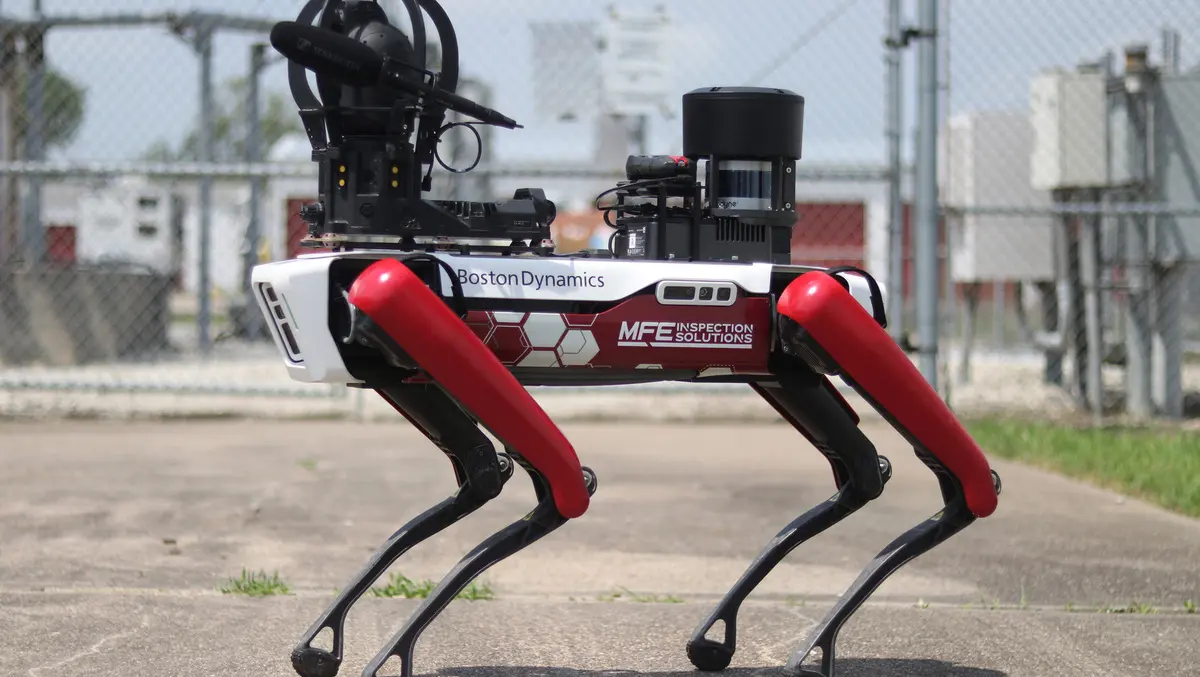

Blackline Safety has partnered with MFE Inspection Solutions to integrate its portable gas detector with Boston Dynamics' Spot robot, adding gas monitoring to robotic inspections.
The system allows Spot to collect gas readings, alerts and location data before workers enter hazardous areas. That information is sent to remote monitoring teams and displayed in Blackline Live software and on the robot's tablet interface.
Industrial operators have long relied on personal gas monitors worn by staff. The new setup extends that model to machines already used for remote inspections in refineries, semiconductor plants and chemical sites.
According to the companies, MFE built the connection between Spot and Blackline's gas detection platform. The system can also trigger an automated return-to-home action if pre-set gas thresholds are reached, including rising lower explosive limit readings.
That means a robot deployed into a restricted or potentially contaminated area can withdraw without requiring a worker to enter the same environment to retrieve it.
Operators will be able to configure the detector with hot-swappable, cartridge-based sensors suited to different industrial settings. The companies pointed to combustible gas monitoring for oil and gas sites, ammonia detection in semiconductor facilities, and toxic gas detection, including hydrogen sulfide, carbon monoxide and sulphur dioxide, in chemical processing plants.
Remote checks
The partnership reflects a broader shift in industrial safety toward combining inspection robotics with connected monitoring systems. Rather than waiting for a worker wearing a monitor to enter an area, companies can gather atmospheric data remotely and feed it into central software used by safety and operations teams.
Dylan Duke, Chief Executive Officer of MFE Inspection Solutions, said the addition of gas monitoring builds on robots' existing role in hazardous settings.
“Gas detection is critical for safety, and teams are no longer limited to collecting that data only when a person enters the area,” Duke said.
“Robots like Spot are already being used to collect inspection data remotely in hazardous environments. This solution adds real-time gas detection to those workflows, giving operators insight into gas hazards before deciding how and when to send people in,” he said.
Blackline cast the integration as a way to connect tools many industrial customers already use separately. It said the combined system gives organisations a live view of gas exposure conditions from a robotic platform, rather than relying only on information gathered after a worker has entered a site.
“This is about connecting technologies customers are already using and making them more useful together,” said Christine Gillies, Chief Product and Marketing Officer at Blackline Safety.
“MFE has built the digital plumbing to connect Spot with Blackline's connected gas detection platform, adding another layer to worker protection while giving organizations critical exposure data as it happens, not after the fact like with traditional monitors, so they can make informed decisions in the moment,” Gillies said.
Broader push
Boston Dynamics said adding a portable gas detector broadens the data Spot can gather during industrial inspections. The robot is already used for thermal, acoustic and visual inspections in facilities where operators want to limit human exposure to difficult or dangerous conditions.
“Spot's thermal, acoustic, and visual inspection abilities provide AI-powered predictive insights into facility health,” said Merry Frayne, Senior Director of Product at Boston Dynamics.
“Integrating the Blackline Safety portable device gives process manufacturers an even more complete picture of their site while keeping people out of harm's way,” Frayne said.
MFE said it will support customers deploying the combined system by helping them assess where robotic gas detection fits into existing inspection and safety procedures. That includes configuring sensors, training personnel and supporting field implementation.
Blackline, based in Calgary, sells connected safety devices and gas monitoring systems used across industrial settings. Its products are used by customers in more than 75 countries and have generated more than 300 billion data points and more than eight million emergency alerts.
MFE distributes inspection and remote visual technologies across the United States, Canada, Mexico and the Middle East, including products from Boston Dynamics and other robotics and inspection equipment makers.
The integration gives plant operators another way to collect atmospheric readings without first sending staff into confined, remote or higher-risk areas, while allowing the same data to flow into existing monitoring systems used by safety teams.