

.webp)
TP-Link has announced Archer 8, its first Wi-Fi 8 router platform for Canada. The product is scheduled to launch in October 2026.
The router is aimed at common home broadband problems, including dead zones, congestion from multiple connected devices, unstable mesh roaming, and latency during gaming, streaming, and video calls.
Archer 8 is based on the emerging IEEE 802.11bn specification, which focuses on reliability rather than headline peak speeds. TP-Link sees that shift as increasingly relevant as households add more connected devices and place heavier demands on home networks.
In internal testing, TP-Link compared early Wi-Fi 8 implementations with Wi-Fi 7 under simulated home conditions. According to the company, the results showed higher throughput at similar distances and signal conditions, along with better performance in larger and multi-floor homes.
Figures released by TP-Link showed up to 33% higher throughput from modulation and coding changes, up to 24% higher throughput from unequal modulation technology, and up to 15% better throughput between multiple access points in interference-heavy settings.
TP-Link also said Archer 8 delivered a 30% signal-performance improvement in multi-floor environments for single-device connections, along with a 10% to 20% improvement in multi-device environments. It added that receive sensitivity on the 5 GHz and 6 GHz bands improved by 1 dB to 3 dB through radio frequency optimisation.
These changes are intended to reduce speed drops, improve stability across several devices, strengthen mesh performance, and keep latency lower in difficult network conditions.
Home demand
The launch comes as router makers try to address a market in which consumers often judge home connectivity by consistency across rooms and floors rather than laboratory speed claims. Canadian households, like those in other developed markets, have seen rising demand driven by remote work, video streaming, gaming, and a growing number of smart home devices.
Benjamin Liu, General Manager, TP-Link Canada, outlined the company's case for the new platform.
"Canadians aren't using Wi-Fi in perfect testing environments - they're streaming, gaming, working remotely, and connecting dozens of devices across every corner of the home," said Benjamin Liu, General Manager, TP-Link Canada.
"Archer 8 was designed and engineered with those real-world demands in mind, delivering stronger, more reliable performance through walls, across floors, and in environments crowded with wireless interference. The result is a faster, more stable connection that keeps up with how Canadians actually live and work today," Liu said.
Product design
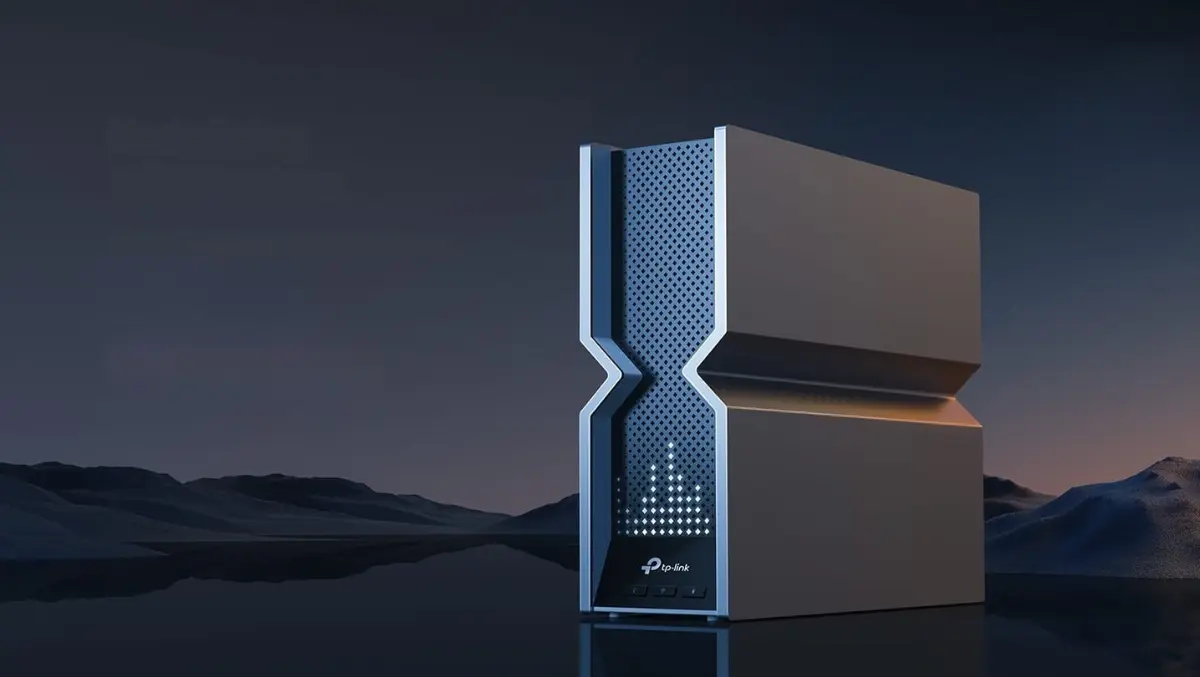
TP-Link described Archer 8 as a premium home networking product with a minimalist design, micro-ridge texturing, precision contours, and a front-facing light. Behind that industrial design, the platform combines thermal engineering, antenna design, radio optimisation, and AI-assisted network management.
That places the device at the higher end of the consumer router market, where manufacturers increasingly try to distinguish products through both technical performance and design as home networking equipment becomes more visible in living spaces.
Broader range
Archer 8 is also the first part of a wider Wi-Fi 8 product plan from TP-Link. The portfolio will extend beyond a flagship router to include a mesh system, a travel router, and Wi-Fi 8 range extenders and adapters.
Those products are intended to serve different home and mobile connectivity needs, from whole-home coverage to portable networking. Specifications and regional availability will vary by market.
TP-Link, which sells consumer networking devices and smart home products globally, is positioning Wi-Fi 8 as the next stage in home wireless networking. For hardware vendors, the transition offers a chance to encourage upgrades from households that have already moved through several generations of Wi-Fi equipment but still face weak spots, interference, and inconsistent everyday performance.
Early commercial claims around Wi-Fi 8 are likely to be watched closely across the industry, especially while the standard is still emerging and comparisons with Wi-Fi 7 remain based on controlled testing rather than large-scale consumer deployment. TP-Link said its latest testing points to gains in throughput, stability, and coverage under the kinds of conditions found in larger and multi-floor homes.